Tag: <span>AI</span>

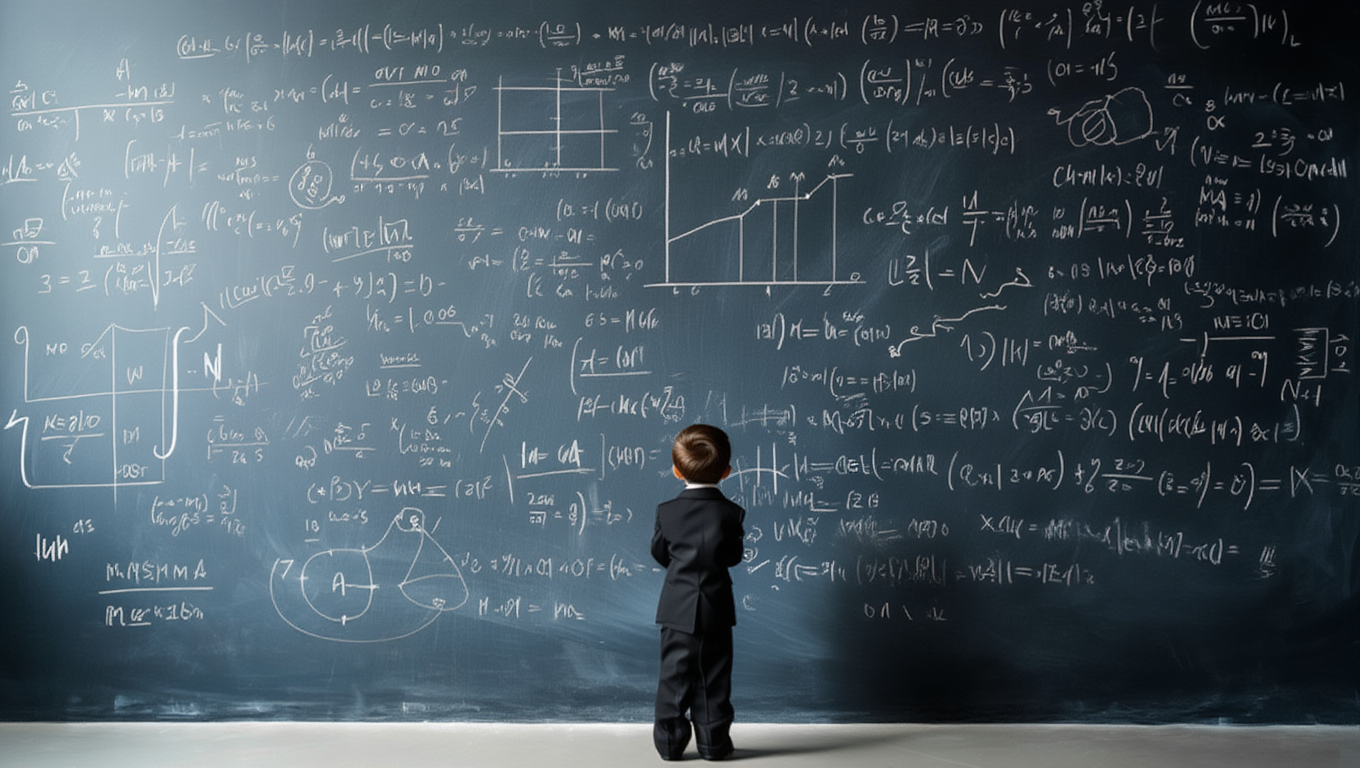
Thales plants a stick in the ground, waits for the perfect angle of the sun, and measures the height of the Great Pyramid of Khufu without ever climbing a single step. The scene is fascinating. But it raises a question far more unsettling than the calculation itself: that morning, did he invent something, or did he simply see what was already there?

Are mathematics an invention of the human mind, or the discovery of laws that existed long before us? Newton and Leibniz developed calculus at the same time, completely independently, thousands of miles apart. The Babylonians knew the Pythagorean theorem before Pythagoras. Complex numbers, invented as a purely abstract game, turned out to be essential to quantum mechanics centuries later.

This is not a textbook question. It is a question of philosophy of mathematics, and it has no definitive answer. That is precisely why it deserves to be asked.
OPINION

AI didn’t force its way in. It made itself indispensable through convenience. And we let it in, without really measuring what we were giving up in return.

In May 2026, Pope Leo XIV published Magnifica Humanitas. An encyclical about AI. Yes, you read that right. And this text says, with a clarity that most tech reports lack, what we still refuse to face: human dignity eroded by algorithms, thought that offloads its own effort, power concentrating in the hands of those who code while everyone else just absorbs the consequences.

I read this text as a practitioner, not a believer. And what I found in it mirrors exactly what I observe every day: we are no longer just automating tasks. We are delegating the way we think.

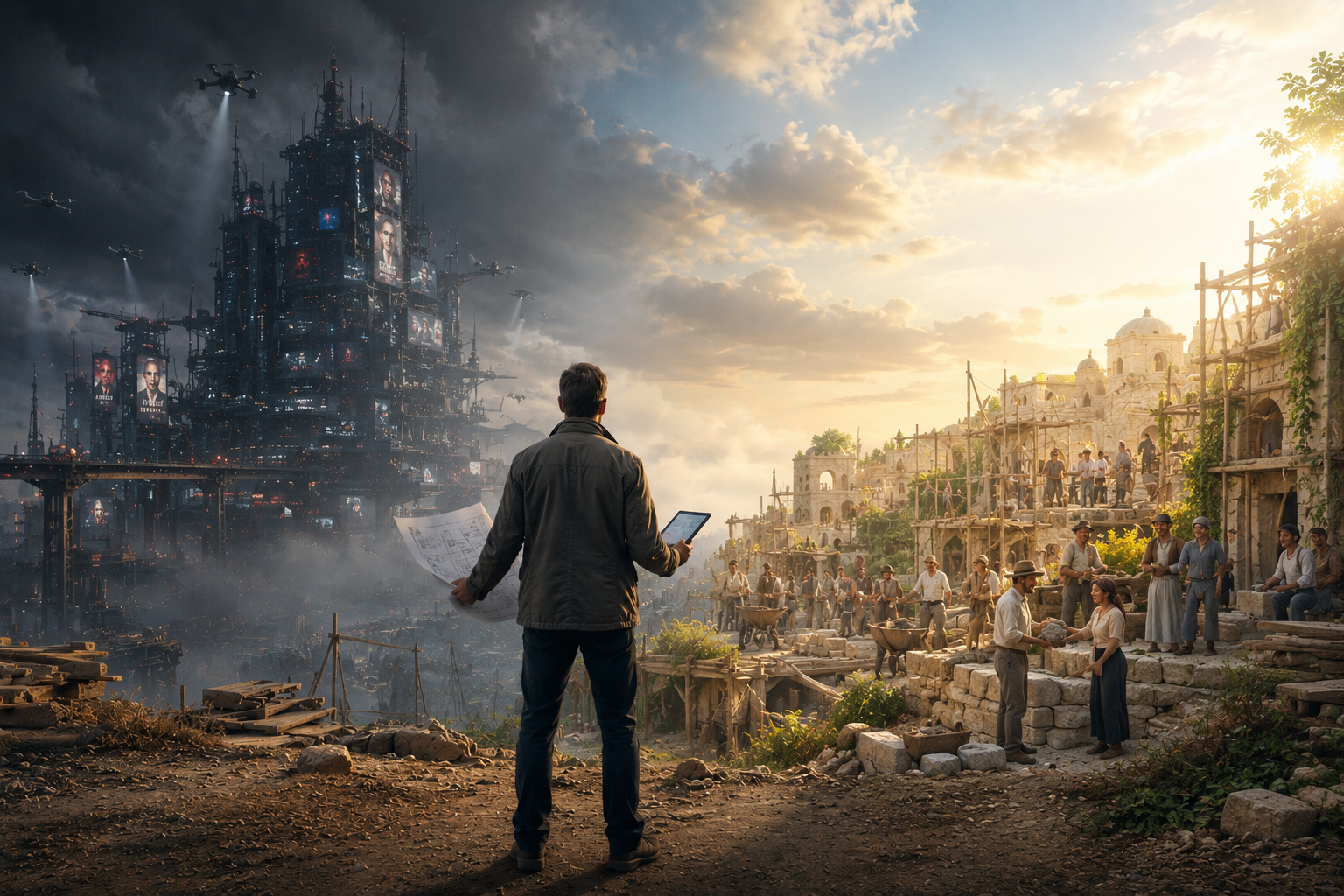
Between Babel and Jerusalem, the encyclical asks a simple, almost uncomfortable question: which construction site are we part of, right now, with the tools we use every single day? What are we actually building? And for whom?

OPINION

Developers are burning out. And it’s not because they’re working too hard.

In barely a year, artificial intelligence has invaded our offices with a brutality nobody truly anticipated. ChatGPT, Claude, DeepSeek… these tools have become our new reflex, our universal shortcut, our permanent validation machine.

But something is cracking. The first ones to fall aren’t confused beginners overwhelmed by technology. They are seasoned engineers, ten or fifteen years in the field, who used AI as an accelerator. Their diagnosis is unanimous: cognitive exhaustion, loss of meaning, silent burnout.

This phenomenon has a name: vibe coding. And it’s not just a developer problem.

Because what these professionals are experiencing with code today, we are already experiencing with our emails, our reports, our strategies. Zero friction is not liberation. It’s a spring-loaded trap.

95% of companies see no measurable return on their generative AI investments. We produce more. We create less value. And in the meantime, something far more precious is quietly eroding: our ability to think for ourselves.

In this article, I explore why the real question is not “how to use AI better” but something far more uncomfortable: what are we becoming while we use it?

#ArtificialIntelligence #AI #Productivity #VibeCoding #DigitalTransformation #FutureOfWork #CriticalThinking #Burnout #ChatGPT #Leadership

OPINION

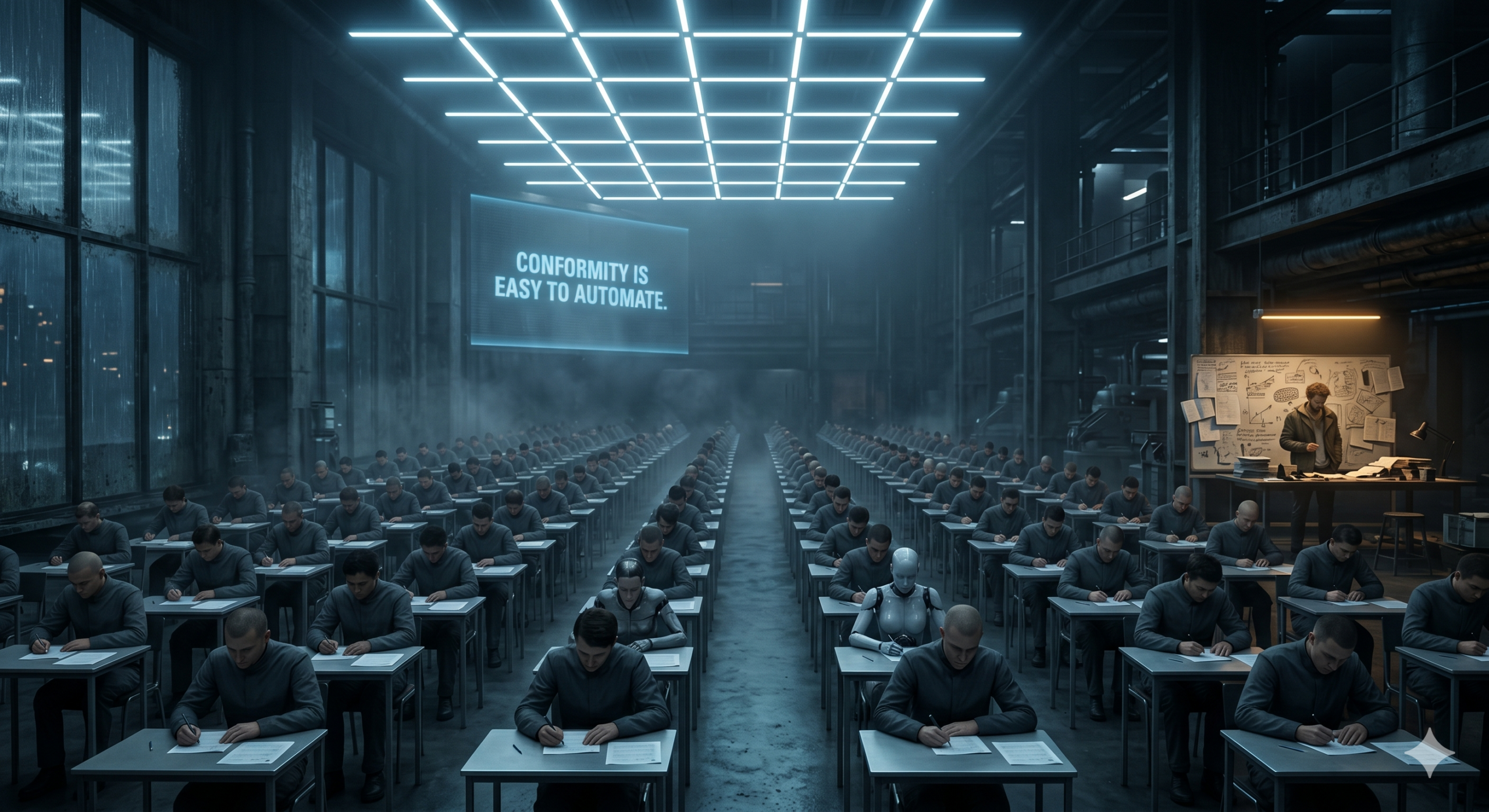
We spent 50 years grading memory, conformity, the ability to regurgitate. Only to discover, a little too late, that this is exactly what a machine does better than any human.

AI doesn’t threaten the people who know how to think. It replaces the ones we trained not to.

This isn’t a technology problem. It’s a pedagogical choice we’ve been pushing to tomorrow for decades.

#Education #ArtificialIntelligence #FutureOfWork #CriticalThinking #Employment #Transformation

OPINION

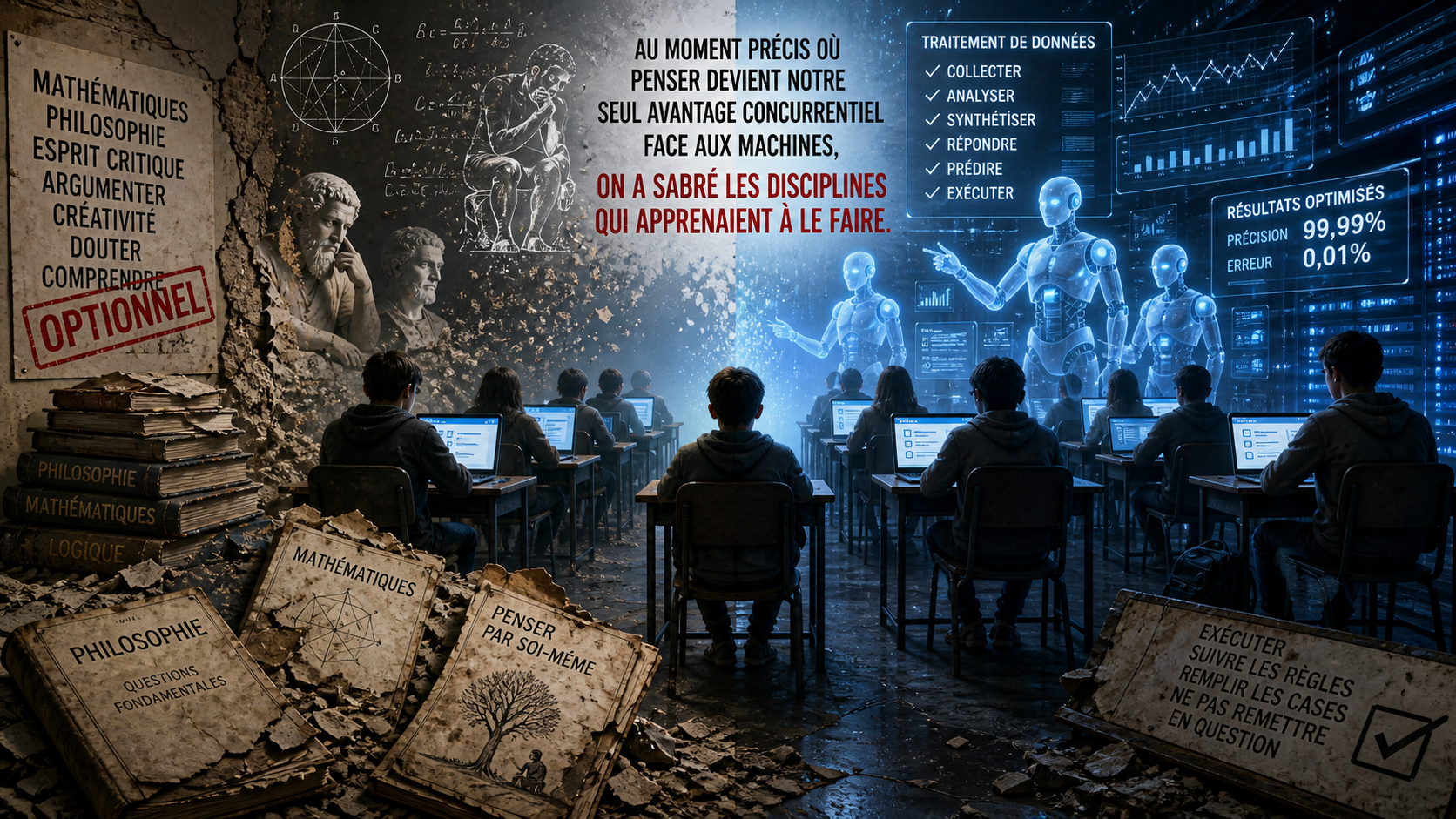
Schools spent 50 years training executors. AI just made that model obsolete.

The worst part? We knew it. We still cut maths from the core curriculum. We sidelined philosophy. We rewarded those who followed instructions rather than those who challenged them.

The result: entire generations trained to do exactly what algorithms do today… better, faster, no coffee break needed.

What cannot be replaced is critical thinking. Doubt. Intuition built through experience. The very skills the World Economic Forum now ranks at the top of recruiters’ priorities worldwide.

The same ones we made optional.

In this second part, we dig into the paradox: at the exact moment when thinking becomes our only competitive edge over machines, we gutted the disciplines that taught us how to do it.

The full article is linked below. It stings a little. That was the point.

#Education #ArtificialIntelligence #FutureOfWork #CriticalThinking #AI #Skills #Learning #Innovation

OPINION