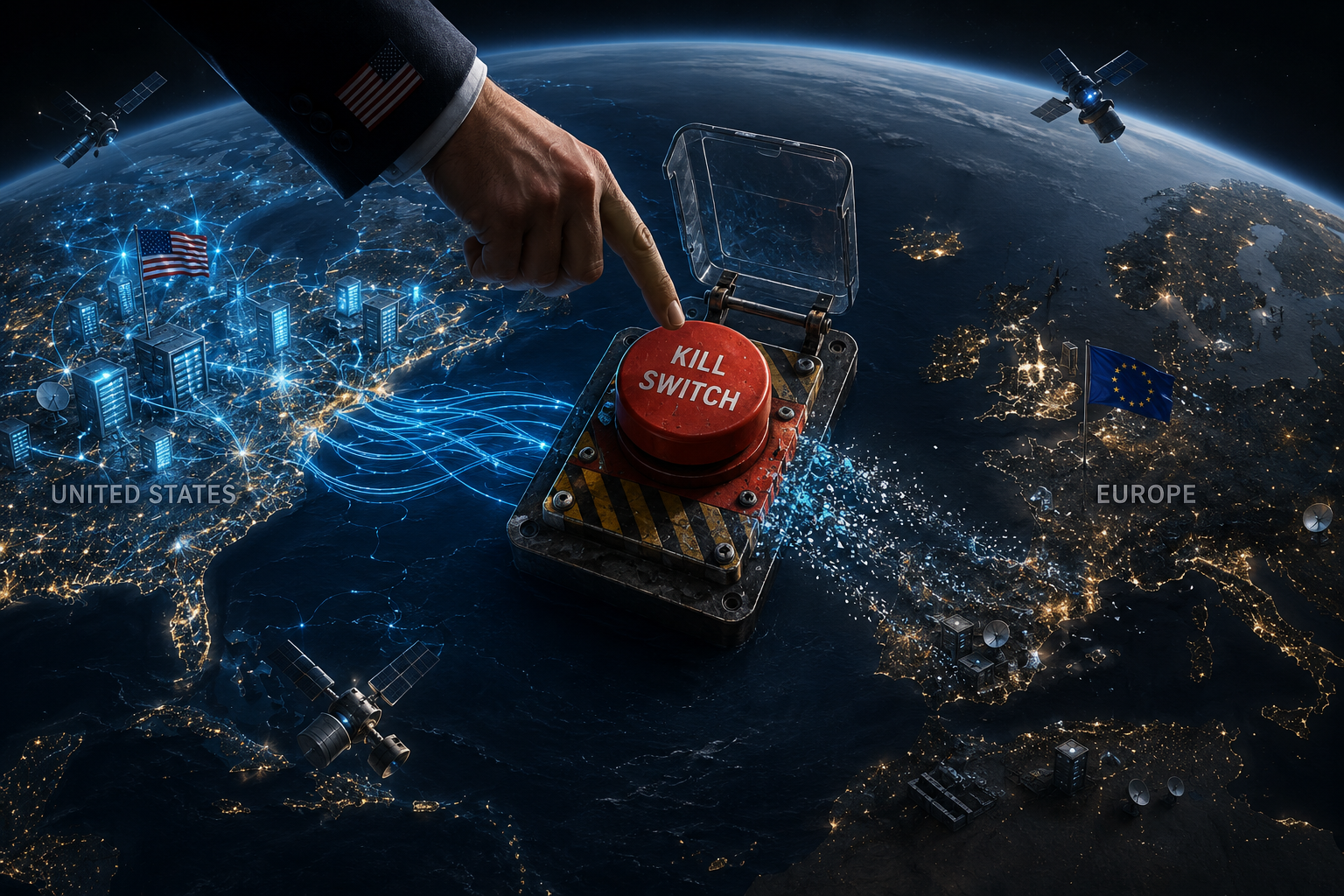
On June 12, 2026, a single administrative letter was enough to cut off access to the world’s two most advanced AI models for millions of users outside the United States. No tanks, no missiles, just a kill switch flipped in a matter of minutes. Behind the official excuse of a “jailbreak” lies a much more mundane reality, and a far more troubling one for European digital sovereignty. In this piece, I break down the anatomy of this global shutdown: the power struggles in Washington, the murky role of industry interests, and what this “cognitive splinternet” reveals about our dependence on American artificial intelligence. An investigation that goes straight to the heart of our digital sovereignty and our ability to stand up to the tech giants.
#Mythos5 #Fable5 #ArtificialIntelligence #DigitalSovereignty #Geopolitics #AI #Cybersecurity #Europe #Anthropic