
ChatGPT has already transformed the way we work, learn, create, and even structure our thinking. Yet behind the spectacular performance of artificial intelligence lie deeper limitations as well, hallucinations, bias, opacity, technological dependence, and a quiet reshaping of our intellectual bearings. This article explores how ChatGPT is revolutionizing the world, not only in our everyday uses, but also in our relationship with knowledge, education, work, and even the future of our civilization.
Category: <span>OPINION</span>

A machine was fed with the equivalent of 10 million books. Then it was taught humanity.
he result? GPT-3 began solving advanced mathematics. Without anyone teaching it. It translated between programming languages. Detected invisible emotional signals. Wrote sonnets under seemingly impossible constraints.
Then GPT-4.5 arrived. Worse than its predecessor on certain tests. With no obvious explanation.
As if these models had their own cognitive weather.
Between 2018 and 2022, behind the closed doors of research laboratories, something was created that we still do not fully understand. Something that develops abilities no one explicitly taught it. And sometimes loses them, without anyone knowing why.
The cost of the operation: 200 million dollars. 25,000 GPUs. 20,000 hours of human labor just to teach it basic politeness.
If their creators discover abilities only after the fact, what other surprises might still be waiting for us?

ChatGPT doesn’t think. And that’s even more fascinating than you imagine.
You believe you’re conversing with an intelligence? In reality, you’re talking to the most sophisticated parrot ever created.
A parrot that has read all of Wikipedia, every book in the Library of Congress, millions of articles and forums. A parrot capable of guessing, with unsettling precision, the exact word that should follow in any conversation.
Not because it understands. But because it has assimilated the patterns of everything humanity has written.
The difference between thinking and predicting? It’s dizzying.
Dive into the heart of the machine. Discover what truly lies behind the apparent magic.

For years, AI giants have been playing the same lottery: stack more and more layers, pump in more and more computing power, hope it holds. Sometimes, after months of training and millions of dollars spent, everything would collapse. Without warning.
The problem? Nobody really knew why.
Then DeepSeek pulled an old algorithm from 1967 out of the archives, forgotten in some dusty math paper. Something that had nothing to do with AI originally. Just matrices and geometry. And with that, they succeeded where others were failing.
This isn’t just a technical improvement. It’s a complete philosophical shift. Proof that you can do better with less, that intelligence isn’t just about size, but about architecture.
The story of how a 60-year-old algorithm just reshuffled the deck in the AI race.
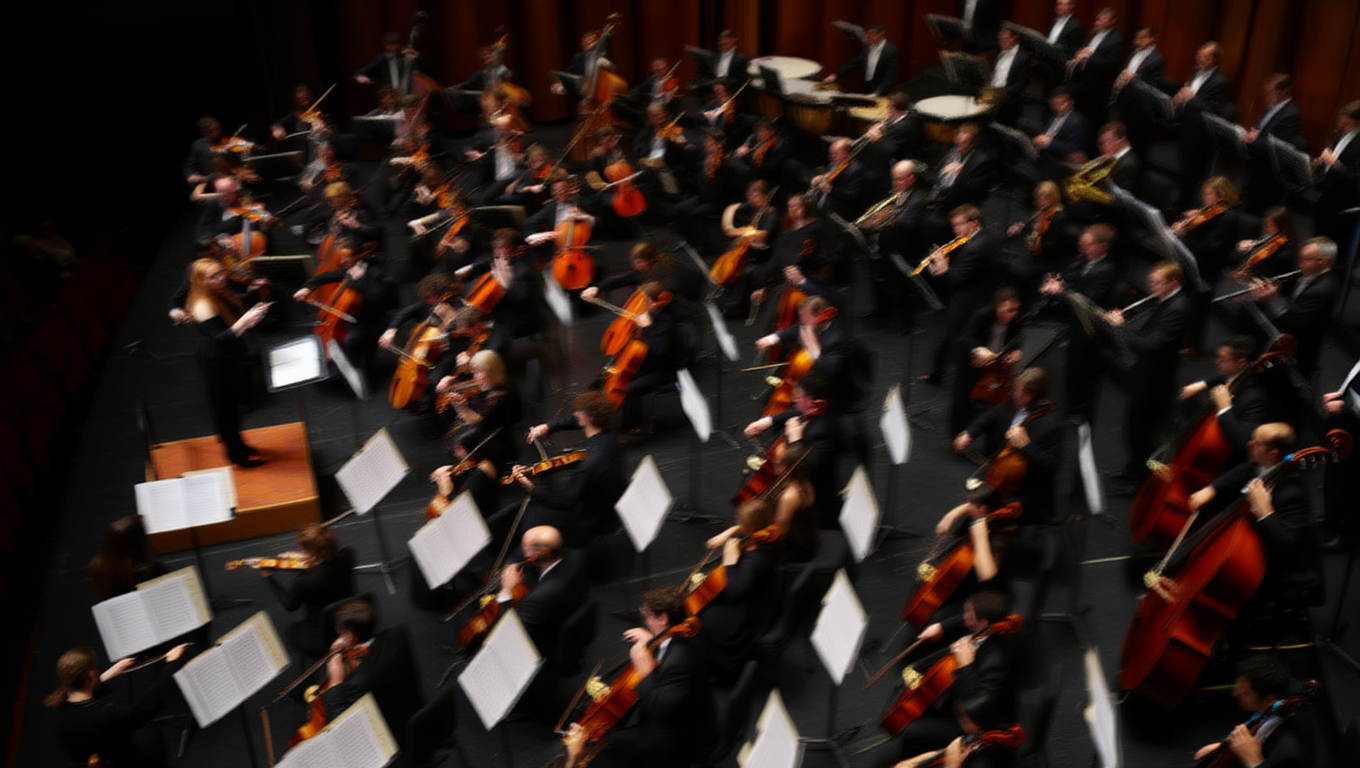
An orchestra without a conductor is organized chaos. Each musician plays in tune, yet together, things begin to drift. AI works the same way. It produces striking text while being able to slip at any sentence, all with the same confident tone. For a long time, we believed there were only two options: speak to it better (prompt engineering) or reprogram it (fine-tuning). But there is a third path, more subtle. A way of whispering directly into its internal states, while it is thinking.
This is called steering.
And it changes everything, not only our relationship with AI.
Our relationship with ourselves as well.