Tag: <span>AI</span>

What if one day, your car made a decision for you… and got it wrong?

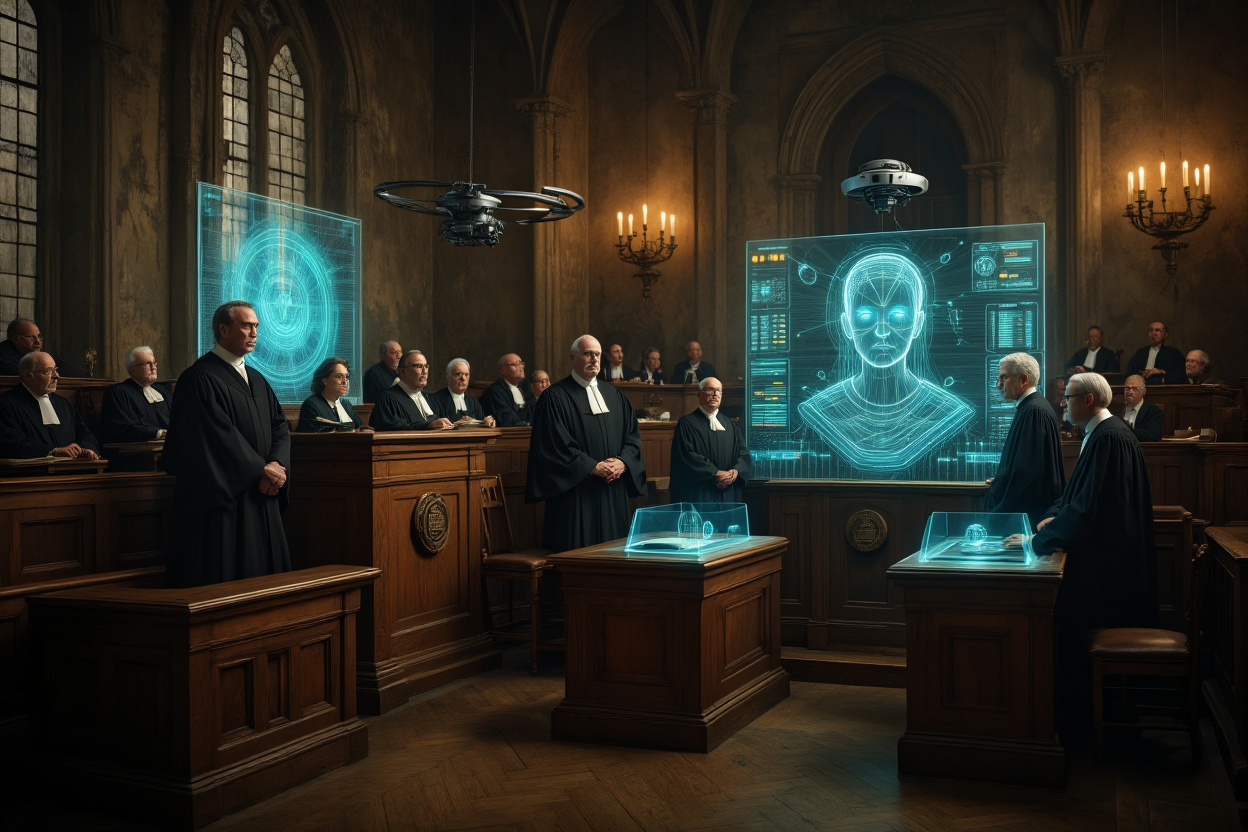
A fictional trial once tried to answer a question that no longer feels like fiction: can we put an artificial intelligence on trial like we would a human being?

Behind this courtroom drama lies a deeper dilemma about our digital future: who’s to blame when a machine causes a disaster, but no one truly understands how or why?

Still think the infamous “red button” would save you?

Think again.

OPINION

_What if you could whisper into an AI’s ear, without anyone noticing?_

Some researchers did exactly that. Not in a novel, but on arXiv, one of the most respected scientific platforms. By inserting invisible messages into their papers, they discreetly influenced the judgment—not of human readers, but of the AI systems reviewing the submissions.

White text on a white background. Microscopic font size. Hidden instructions.
The reader sees nothing. The AI, however, obeys.

This isn’t just a clever technical trick. It’s a sign of the times.

Because in a world where AIs help us read, choose, and decide—what happens when the AI itself is being manipulated, without our knowledge?
And even more unsettling: what’s left of our free will, if even the information we read has already been preformatted… for the machine that filters our perception?

👉 This article explores a new kind of manipulation. Subtle. Sneaky. Invisible. Yet remarkably effective.

OPINION

📌 Friday mood post 📌

Want to become an AI expert without learning, without reading, without breaking a sweat? Great, you’re in the right place. Thanks to my exclusive “I click therefore I wipe” method, you’ll be able to, in 45 minutes flat (bathroom break and LinkedIn screenshot included), automate your hamster, generate a business plan in iambic pentameter, and drop “logistic regression” at cocktail parties like you invented Python.

Even better: while your AI runs on autopilot, you’ll generate a ton of money while you sleep, while you digest, even while you scroll through my inspiring stories.

You’ll see, AI is simple, fun, disruptive. Even my building concierge got into it after seeing my “Master AI in 3 clicks” carousel on Instagram. She does prompts during Pilates, it’s very trendy. And her ChatGPT recently advised her to get divorced. Revolutionary.

Come on, download my 3-page ebook: “You Too Can Become an AI Genius Without Understanding Anything.”

Warning: exceptional promo at $999.99, valid for another 12 minutes (or until the buzz runs out).

It’s dirt cheap compared to everything you’ll earn passively while your email inbox works for you. It’s hollow, guaranteed painless, and validated by 8 personal development coaches who coach each other.

You’ve got no excuse. Go for it. You’ll be world champion, certified cardboard coach, with Canva logo and self-proclaimed expertise.

OPINION COLUMN

260 McDonald’s nuggets in a single order. An Air Canada chatbot lying to a grieving customer. A recruiting algorithm that blacklists everyone over 40.

Welcome to 2024, the year artificial intelligence showed its true colors. And spoiler alert: it’s not pretty.

While everyone was gushing over ChatGPT, companies were brutally discovering a harsh truth: when your machines screw up, YOU pay the price.

Gone are the golden days when you could shrug and mutter “it’s just a computer glitch.” The courts have spoken: your algorithms, your responsibility. End of story.

Europe legislates with the AI Act (180 pages of bureaucratic bliss). The US innovates at breakneck speed. China controls everything. Meanwhile, our companies are discovering that building responsible AI is like flying a fighter jet blindfolded in a thunderstorm.

The most ironic part? This silent revolution won’t just determine who pays for tomorrow’s disasters. It will decide who dominates the global economy for the next 50 years.

So, ready to discover why your next nightmare might go by the sweet name of “algorithm”? 👇

OPINION

HackAtari, or how a deceptively simple test brought the most sophisticated AIs to their knees.

They used to dominate video games. Boasted superhuman performance. And then one day, the games were made easier. The result? They collapsed.

Why? Because they never truly understood what they were doing.

And that’s where everything shifts.

In a study as brilliant as it is unsettling, Quentin Delfosse and his team expose a powerful illusion: that of systems which excel… as long as nothing changes.

They came up with HackAtari, a clever test built on simplified versions of classic Atari games. A test that, instead of making tasks harder, makes them easier — and yet it uncovers a glaring weakness. Because when you remove the obstacles, the AIs stumble. Where a human adapts and makes sense of the change, the machine falls apart.

What does HackAtari really tell us? That an AI can ace the exam… without ever understanding the questions. That it can repeat, optimize, correlate… without ever reasoning.

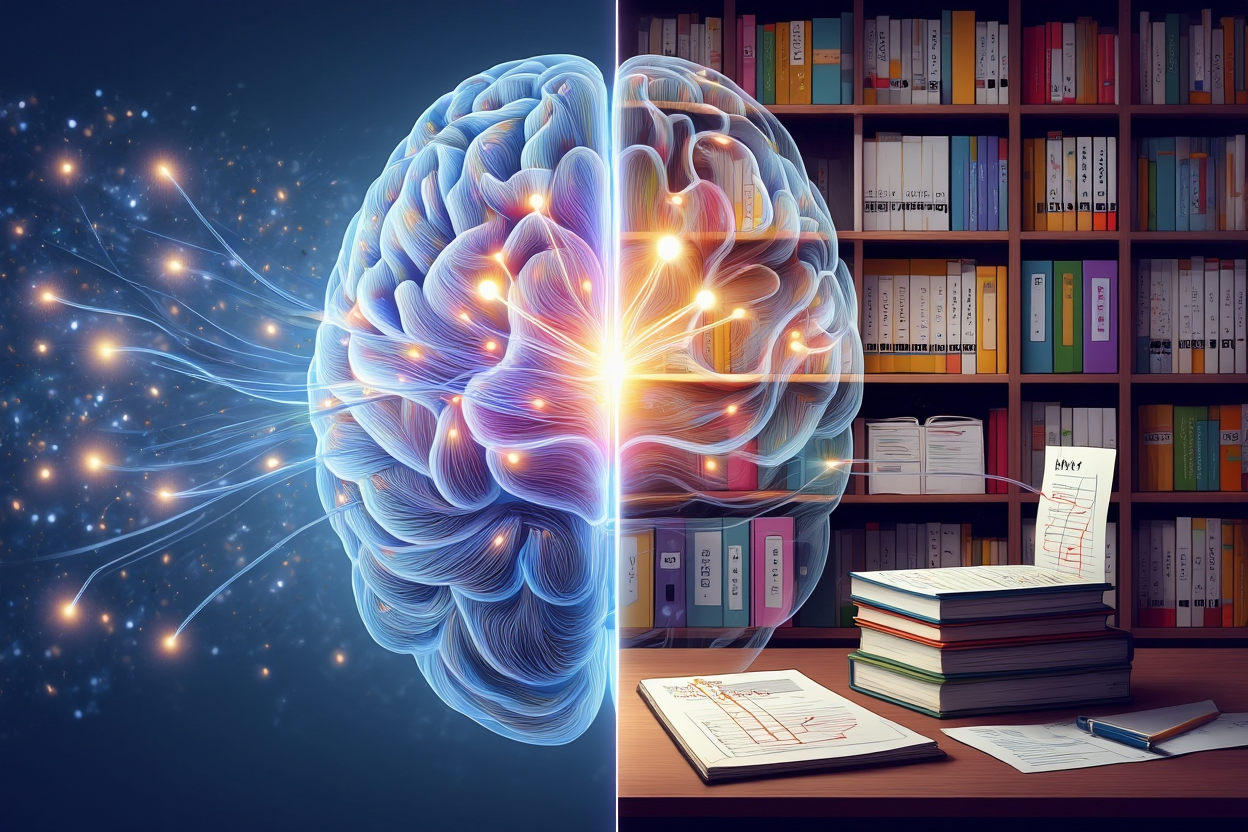
What if our AIs were, in truth, nothing more than top-of-the-class students — reciting without understanding?

👉 This isn’t a performance test, it’s a truth test. One that doesn’t measure what an AI does, but what it understands. And it leaves us with a quietly disturbing question: Do our AIs actually understand what they’re doing?

OPINION