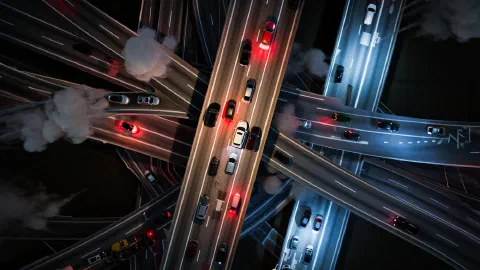
School still trains people to memorize and execute. The world, meanwhile, demands the ability to understand, connect and think. While some spend an hour struggling through an essay, others get a perfect answer in 4 seconds thanks to artificial intelligence. This gap exposes a deep flaw in our education system. AI, education, critical thinking, the future of work… what if we’ve spent the last 50 years preparing our children for a world that no longer exists?
AI, Education
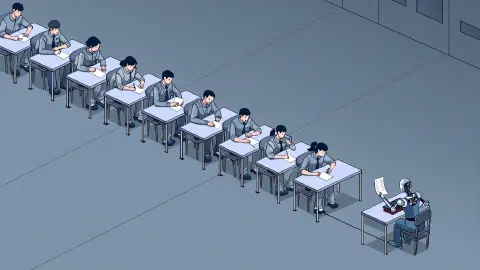
We long believed technology would always get faster, more powerful, and cheaper. That era is over. Techflation is rewriting the rules of the game, quietly, while most leaders look the other way. In this third and final part of our series, we move beyond causes and symptoms. We talk about what’s really coming: a two-speed AI that will deepen global inequality, a painful reindustrialisation whose bill we will all end up paying, and a historic bifurcation from which no one will emerge unscathed. The question is no longer whether the shock is coming. It’s about what you do now that you know it is.
AI, Digital sovereignty
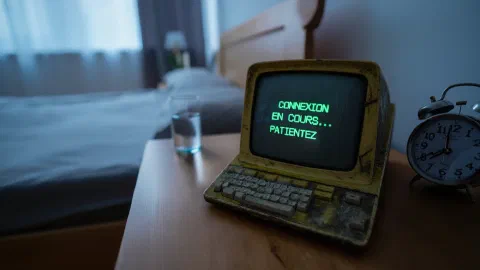
The myth of ever-cheaper technology is collapsing. And this time, it’s not a passing crisis. Rising component prices, the disappearance of mid-range devices, cloud providers passing their costs onto businesses… Techflation is no longer an economist’s hypothesis: it’s showing up in your IT budgets and your wallet. What this article breaks down: – Why smartphones under $300 are simply going to disappear – How financial markets are still ignoring the true depth of this crisis – What strategies companies and governments are starting to adopt to reclaim control over their digital sovereignty Between the Androidcalypse reshaping the mobile market, the extreme fragility of semiconductor supply chains, and the rise of new alternatives (RISC-V, open source AI), the digital world as we know it is undergoing a profound transformation. The question is no longer whether things will change. It’s already happening.
AI, Ecological transition, Economy

What if the promise of ever-cheaper digital technology were coming to an end? Component shortages, dependence on scarce resources, surging energy consumption from data centers… the signals are piling up, revealing a deep transformation of the digital economy. This phenomenon goes beyond rising costs. It marks a turning point: technology is becoming a strategic resource, constrained and contested. A shift that is already forcing us to rethink our technological and industrial models. Welcome to the era of techflation.
AI
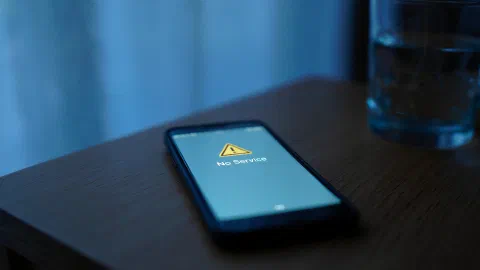
🤖 What if artificial intelligence was actually surpassing us, for real? AGI, multimodality, technological arms race… What still sounded like science fiction 5 years ago is now on researchers’ desks. And the deadlines are closing in faster than anyone expected. In this article, I explore the big questions reshaping our relationship with AI: → Why are AGI predictions accelerating so fast? → What are the real challenges: alignment, inequality, geopolitics? → And above all: what role can Europe still play in this revolution? We can no longer afford to wait before we understand.
AI, Biases

ChatGPT has already transformed the way we work, learn, create, and even structure our thinking. Yet behind the spectacular performance of artificial intelligence lie deeper limitations as well, hallucinations, bias, opacity, technological dependence, and a quiet reshaping of our intellectual bearings. This article explores how ChatGPT is revolutionizing the world, not only in our everyday uses, but also in our relationship with knowledge, education, work, and even the future of our civilization.
AI, Biases, Ethics, Paradox

A machine was fed with the equivalent of 10 million books. Then it was taught humanity. he result? GPT-3 began solving advanced mathematics. Without anyone teaching it. It translated between programming languages. Detected invisible emotional signals. Wrote sonnets under seemingly impossible constraints. Then GPT-4.5 arrived. Worse than its predecessor on certain tests. With no obvious explanation. As if these models had their own cognitive weather. Between 2018 and 2022, behind the closed doors of research laboratories, something was created that we still do not fully understand. Something that develops abilities no one explicitly taught it. And sometimes loses them, without anyone knowing why. The cost of the operation: 200 million dollars. 25,000 GPUs. 20,000 hours of human labor just to teach it basic politeness. If their creators discover abilities only after the fact, what other surprises might still be waiting for us?
AI, Ethics

ChatGPT doesn’t think. And that’s even more fascinating than you imagine. You believe you’re conversing with an intelligence? In reality, you’re talking to the most sophisticated parrot ever created. A parrot that has read all of Wikipedia, every book in the Library of Congress, millions of articles and forums. A parrot capable of guessing, with unsettling precision, the exact word that should follow in any conversation. Not because it understands. But because it has assimilated the patterns of everything humanity has written. The difference between thinking and predicting? It’s dizzying. Dive into the heart of the machine. Discover what truly lies behind the apparent magic.
AI, Innovation
**November 2022.** One button. Five days. One million users. ChatGPT has just been born, and nobody yet knows that the world will never quite be the same again. What took Facebook 10 months, Netflix 3 and a half years, happened in less than a week. Today, you talk to it like you’d ask for the time. 400 million people do it every week. The machine has entered our thoughts. Discreetly. Massively. But here’s the most troubling part: this revolution rests on a discovery only eight years old. A seemingly innocuous paper. An almost bureaucratic title: _ »Attention Is All You Need »_. Its authors probably didn’t know they had just rewritten history. **How did a technology colonize our lives in so little time? How can a machine write like Hemingway, code like a senior developer, and sometimes… understand us better than we understand ourselves?** In this five-part series, I’m taking you on a journey to the heart of this silent revolution. No jargon. No mystification. Just clarity. Because understanding AI is no longer a luxury. It’s become a civic necessity.
AI

For years, AI giants have been playing the same lottery: stack more and more layers, pump in more and more computing power, hope it holds. Sometimes, after months of training and millions of dollars spent, everything would collapse. Without warning. The problem? Nobody really knew why. Then DeepSeek pulled an old algorithm from 1967 out of the archives, forgotten in some dusty math paper. Something that had nothing to do with AI originally. Just matrices and geometry. And with that, they succeeded where others were failing. This isn’t just a technical improvement. It’s a complete philosophical shift. Proof that you can do better with less, that intelligence isn’t just about size, but about architecture. The story of how a 60-year-old algorithm just reshuffled the deck in the AI race.
AI