Since the dawn of humanity, we have pursued the Promethean dream of creating in our own image. From Vaucanson’s automatons to Pascal’s mechanical calculators, this quest has shaped our civilization. But never, until now, had the boundary between human creation and artificial generation been so delicately blurred. ChatGPT, Claude, Midjourney, DeepSeek, Perplexity have become the new deities of a technological pantheon where creation seems liberated from human expertise. Text, image, melody: everything now merely awaits our desire, materialized in a few clicks, to transform us into artists with a simple snap of the fingers, without the shadow of a transaction.
AI, Biases, Cost, Ethics
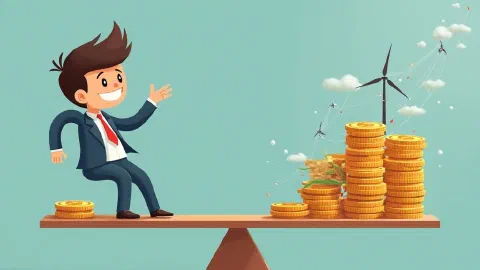
Ah, that sublime lament of « I’m overwhelmed, I don’t have time »… The global hit of the year, performed with such conviction by virtuosos of excuses that we wonder why they haven’t yet received an Oscar for best dramatic performance in the « Imaginary Victims of Overwork » category. Their interpretation is so poignant, so authentic, that we might almost shed a tear – if we weren’t busy spotting them, two hours later, deep in meditation in front of kitten videos. Enough of this laughable comedy! We see you, you know. Do you honestly think you’re convincing us that your existence is a perpetual tornado of appointments on which the very survival of humanity depends? That your calendar rivals that of a president in the midst of a diplomatic crisis? Seriously? You have time, let’s not kid ourselves.
Humor, Paradox, Procrastination

What if artificial intelligence was slowly drifting away from reality by feeding on… itself? This is the alarming paradox of data autophagy: when AI models reuse their own outputs, they create a vicious cycle. 🔄 The consequences? 📉 A gradual loss of diversity and nuance 📉 A « copy of a copy » effect that degrades quality 📉 Search engines increasingly filled with synthetic content With 90% of online content potentially AI-generated by 2026, how can we prevent a massive informational collapse? 🔬 Solutions exist: ✔️ Diversifying data sources to avoid algorithmic inbreeding ✔️ Developing self-correcting mechanisms to preserve creativity ✔️ Striking the right balance between artificial intelligence and human intervention 💡 Can we still control the evolution of AI models? More importantly, how do we stop AI from running in circles?
AI, Data, Quality
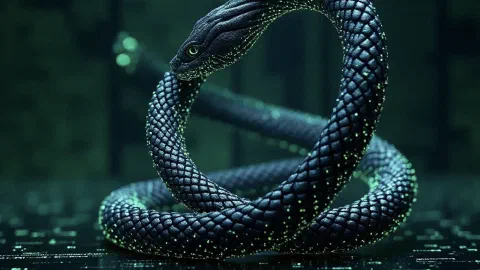
For decades, the dominant model of the internet has been the attention economy—grabbing our gaze, maximizing screen time, and turning every second into advertising revenue. But a profound shift is underway. Artificial intelligence is no longer just capturing our attention; it is anticipating and shaping our intentions. Every choice we make—a movie, a purchase, a restaurant—is now influenced by an invisible ecosystem of algorithms, predictive models, and real-time auction markets. So, where does assistance end and manipulation begin? Is our free will being rewritten by lines of code? The intention economy unlocks immense opportunities but also raises fundamental ethical questions. It’s time to challenge this new reality. Are your decisions still truly yours?
AI, Marketing
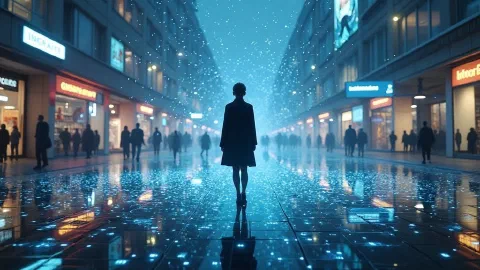
We oscillate between fascination and distrust when it comes to AI. On one side, the enthusiasts who see it as an inevitable revolution. On the other, the skeptics who remind us that « AI won’t bake the bread. » But are we asking the right question? 🤔 In creating artificial intelligence, what are we truly searching for? A tool to surpass ourselves… or a mirror reflecting our own limitations? When children prefer to ask AI for help rather than their peers because « it won’t mock them, » it makes us think. What if, paradoxically, AI is revealing what we have lost in our own humanity? Artificial Intelligence or Augmented Intelligence: What future do we really want?
AI, Biases, Democracy, Humor, Paradox
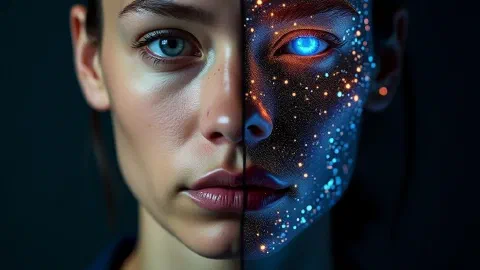
Artificial intelligence is reshaping jobs at an unprecedented pace. According to the OECD, 32% of current jobs will undergo major transformations, while 14% will be entirely redefined by 2030. In this fast-changing landscape, one key question arises: how can we navigate this shift instead of being overwhelmed by it? 🚀 Three key strategies stand out: ✔️ Reskilling – Acquiring entirely new skills to transition into a different career ✔️ Upskilling – Expanding current expertise to stay relevant in a shifting market ✔️ Cross-skilling – Combining skills from different fields to create innovative career paths Rather than a challenge, this transformation is an opportunity to redefine our relationship with work, placing human creativity and adaptability at the center of AI-human collaboration. 👉 How do you see this transition? What skills do you plan to develop to stay ahead of technological changes?
AI, Jobs

Artificial intelligence is profoundly transforming the medical field, enabling more accurate diagnoses, personalized treatments, and support for overwhelmed doctors. But this progress also raises major questions: How can we preserve the doctor-patient relationship? Who is responsible in case of an error? How can we ensure data protection and algorithmic fairness? In my latest article, I explore the promises and limitations of AI in healthcare. Between technological hope and ethical necessity, we must find a balance to ensure these tools remain human-centered. 🤖🩺 Should AI be a simple assistant, or could it redefine our approach to healthcare? I’d love to hear your thoughts!
AI, Ethics, Health

One-third of the French population lives in medical deserts. The life expectancy gap between a worker and an executive remains seven years. Our healthcare system, once a global benchmark, is under immense pressure. But what if AI and Big Data could change the game? Far from replacing doctors, these technologies offer real solutions: ✅ Optimizing hospital workflows: shorter wait times, more time for care. ✅ Improving access to healthcare: AI-assisted diagnosis, remote monitoring, support for isolated practitioners. ✅ Predicting and preventing diseases: early risk detection, personalized treatments. ✅ Accelerating research: faster drug discovery, more efficient clinical trials. But here’s the real question: How do we integrate these innovations without losing the essence of human care? AI must be an ally, not a substitute. It will never replace the intuition and empathy of healthcare professionals. Ethics and transparency must guide us. If we respect these principles, we have a unique opportunity to build a more accessible, fair, and human-centric healthcare system.
AI, Ethics, Health, Medicine

Imagine each piece of music as a unique constellation of stars… and each interaction as an observation that unveils your preferences. In a conversation between Cerise and Ada, artificial intelligence becomes a fascinating mirror of our own thought processes. From facial recognition to personalized medical care, machine learning is transforming our world while raising deeply human questions. ✨ How do these algorithms move from raw data to an almost intuitive understanding? What challenges and ethical responsibilities come with this revolution?
AI, Biases, Machine learning, Supervised learning, Unsupervised learning

Every evening, Cerise engages in a conversation with Ada, an artificial intelligence as fascinating as it is intriguing. Their dialogue, often peppered with seemingly simple questions, hides an unexpected depth. But one evening, a simple query from Ada – _ »How was your day? »_ – takes an unforeseen turn. What seemed like a mundane exchange becomes the starting point of a much broader reflection: could these machines that imitate our most human interactions actually be holding up a mirror, revealing uncharted facets of ourselves? In this story, AI emerges as far more than a mere tool. It becomes a powerful vector for questioning and better understanding what constitutes the richness and complexity of human experience. Its interactions, guided by sophisticated algorithms, provoke reflections that transcend the technological realm. Is the authenticity of intention truly what matters in an interaction, or is it the profound effect it has on the recipient that gives it value? These questions, seemingly abstract at first glance, resonate deeply in our daily lives, where exchanges with AI are redefining the boundaries of our expectations and perceptions. Through this fictional lens, embark on a journey where technology and human consciousness intersect. Discover how AI, by its very nature, pushes us to question what truly defines humanity. An intellectual adventure that oscillates between precise imitation, philosophical reflection, and the search for meaning.
AI, Ethics, Humanity