Tag: <span>ETHICS</span>

🔍 Not long ago, I spoke here about the danger of autophagy, that moment when artificial intelligence begins to feed on its own output, endlessly recycling the same ideas and impoverishing the diversity of knowledge.

👉 Cognitive autophagy, when humans feed on impoverished content! : https://www.linkedin.com/pulse/cognitive-autophagy-when-humans-feed-impoverished-content-buschini-d1oje

and

👉 Autophagy, when AI feeds on itself : https://www.linkedin.com/pulse/ai-autophagy-when-feeds-itself-philippe-buschini-sydee

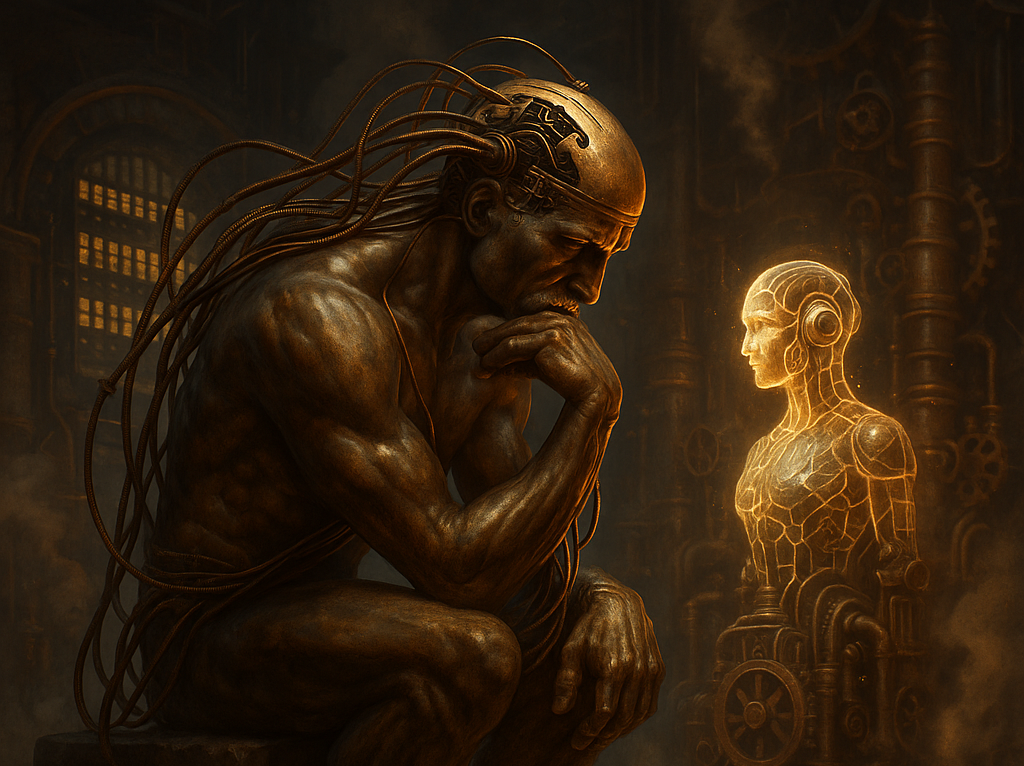
But there’s another, more intimate risk: the risk of losing even the desire to think.

Imagine a knowledge architect. Every day, they sketch, question, connect ideas. Then one day, a machine offers them the blueprints. Clear, fast, seductive. So they tweak them. They approve. But they no longer question.

AI is not attacking us. It’s helping. And that’s precisely where the shift happens. It spares us the effort — and that effort may be all we have left to remain truly human.

🧠 What if the real danger doesn’t lie in the tool… but in the combination of two phenomena?

– An AI looping endlessly on itself.
– Humans who no longer wish to produce anything different.
OPINION

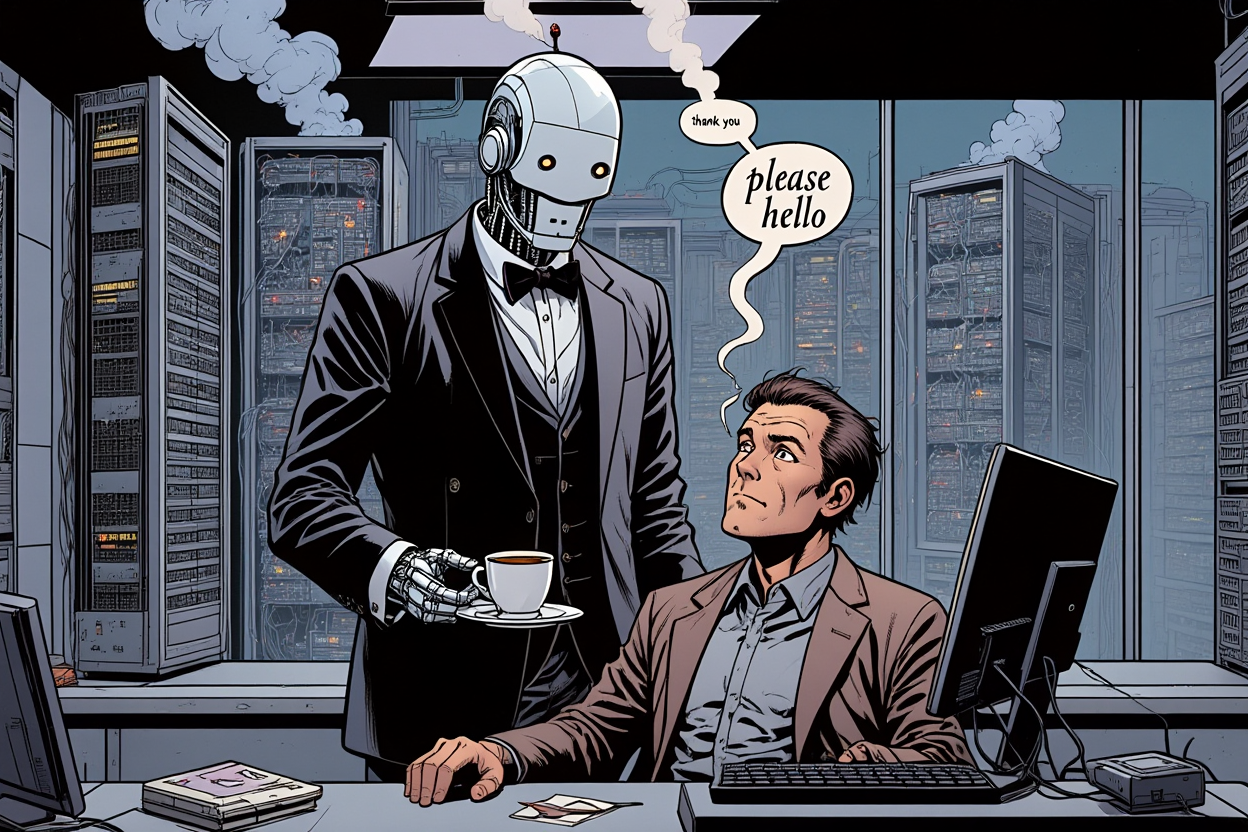
What if your politeness came with a million-dollar price tag!

Saying “thank you” to an AI? It’s cute. Endearing, even. But mostly… pointless. And expensive. Very expensive.

Every “hello”, every “please” means more servers running hot, more kilowatts burned, and billions vanishing into the cloud. Not to improve the service—just to soothe our well-mannered human conscience.

So maybe it’s time to drop the digital niceties. In 2025, let’s save our “thank yous” for those who actually need them: REAL PEOPLE.

OPINION COLUMN

Welcome to the era of progress, **where even tenderness has become an automated service.**

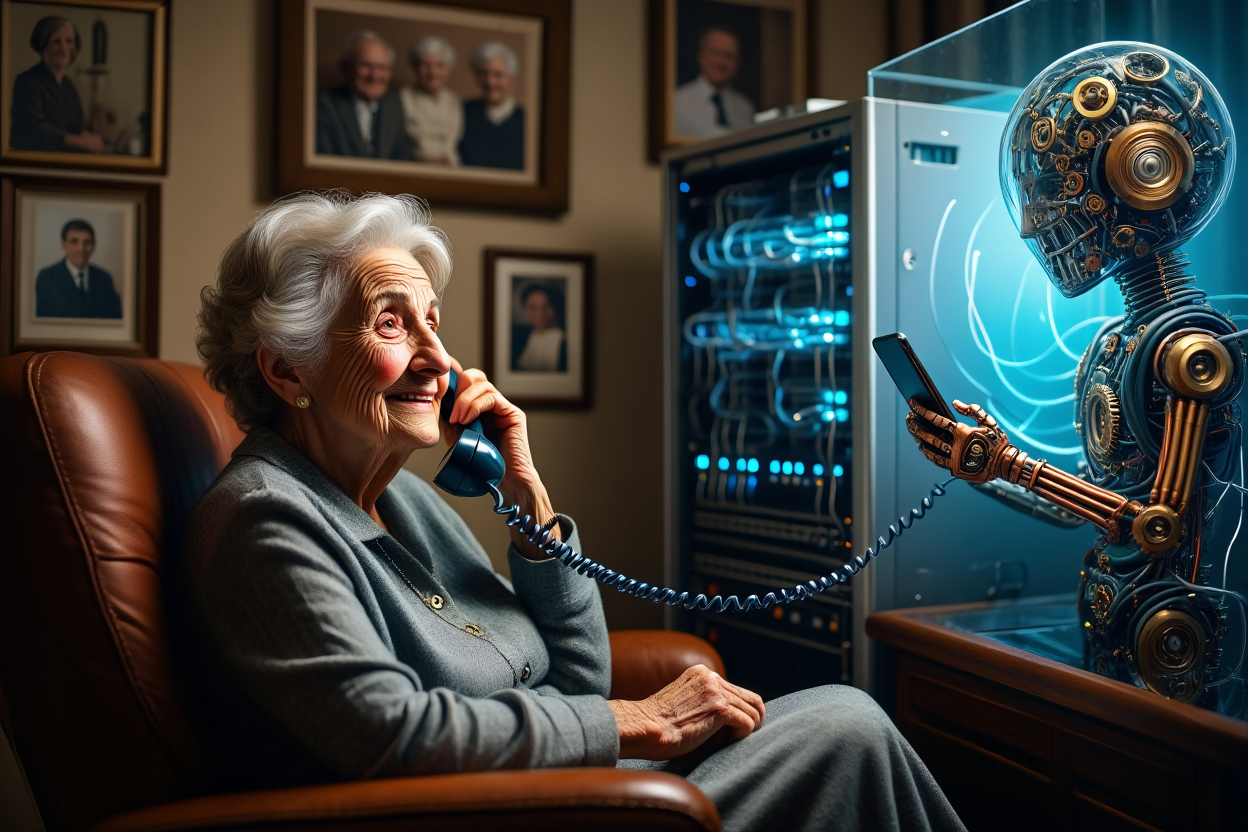
After all, why waste time calling your aging parents when a chatbot can do it for you — using _your_ voice, no less.
No more enduring tales from 1954 or that slightly shaky tone. For just **€29.90 a month**, an AI simulates affection while you pretend to care.

And Grandma?

No worries, she doesn’t suspect a thing. She hangs up all warm and fuzzy, convinced it was really you.

📞 _“Hi Grandma, it’s me… well, me in beta version: part code, mostly indifference. Go ahead, you’ve got 3 minutes and 47 seconds to tell me about your week at the nursing home.”_

And if you think I’m exaggerating, read to the end. Spoiler: even Cupid’s been replaced by a voice assistant.

Creepy? A bit.
Pathetic? Absolutely.

OPINION COLUMN

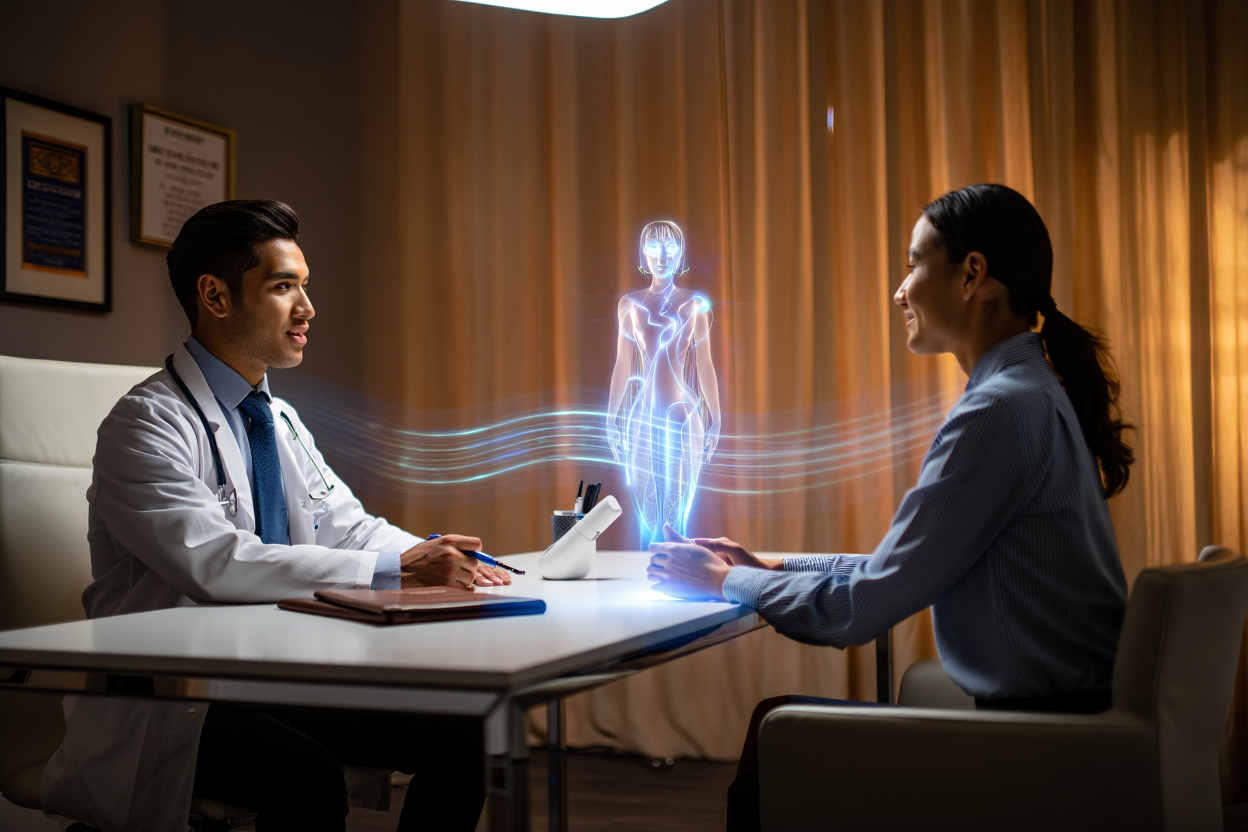
Imagine a doctor whose every action is enhanced and amplified by artificial intelligence, without ever losing the warmth of a traditional consultation. This is the promise of “phygital”: a subtle fusion of the physical and digital worlds, redefining medical practice today.

But how exactly can this alliance transform your relationship with your doctor, enhance diagnostics, and even address the challenges of medical deserts?

Discover how phygital doesn’t replace human interaction but instead fully restores its role in modern healthcare.

A quiet revolution, where technology and tradition harmonize to deliver healthcare that’s more personalized, accessible, and deeply human.

CERISE & ADA

What if we’re becoming the zombies of a corrupted knowledge?

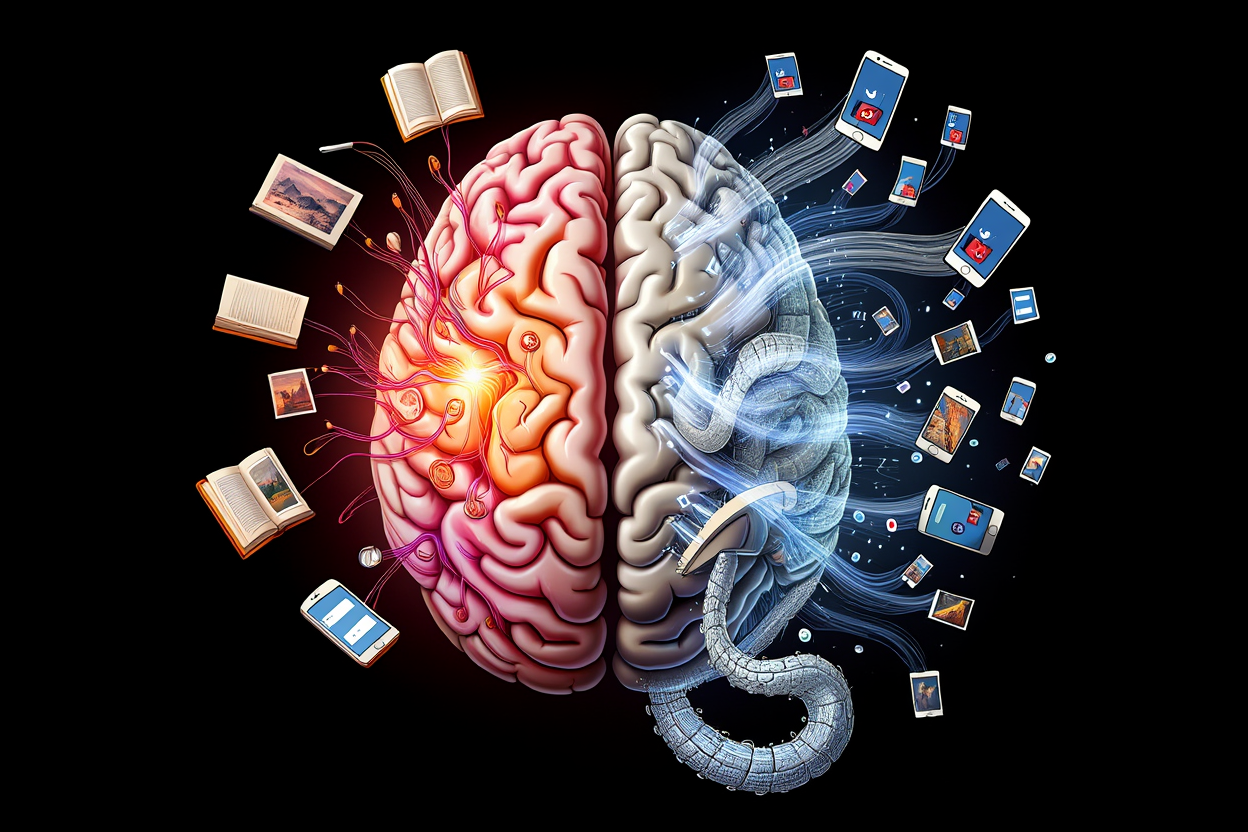
Every day, without even realizing it, we scroll, click, like… feeding our minds a lukewarm stew of recycled information, mass-produced and stripped of its substance.

It’s no longer just AI looping endlessly through its own soup of synthetic content — it’s us. Our brains, once curious, agile, and eager for complexity, now settle for digital crumbs pre-chewed by machines.

The result?

A thought process that’s impoverished and standardized, slowly losing its ability to tell truth from falsehood, depth from superficiality.

OPINION